Unit 2
Kenal Carta Pai
Murid Kelas 3 Amanah datang ke sekolah dengan cara yang berbeza.
Data itu boleh dilukis dalam sebuah bulatan yang dibahagi kepada beberapa bahagian.
Carta ini dipanggil carta pai.
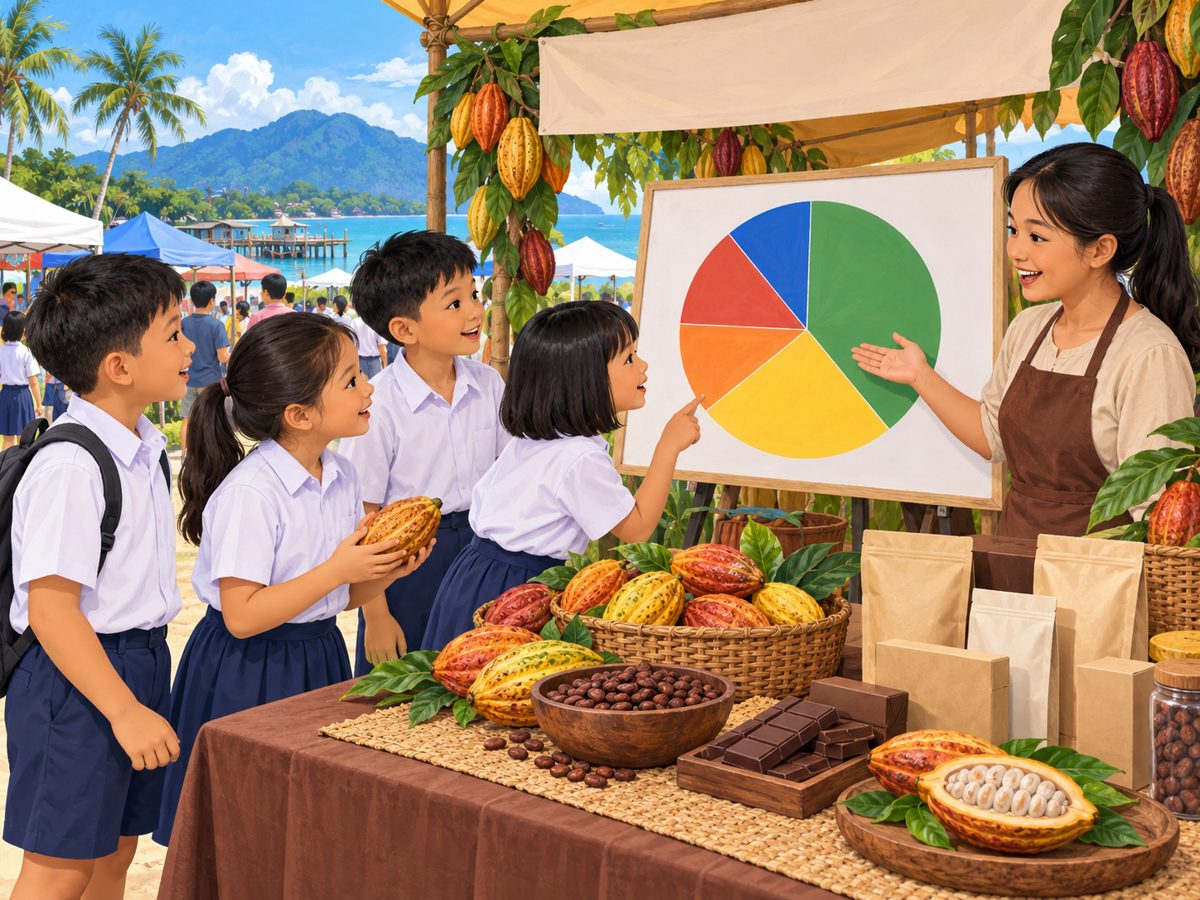
饼分图 = carta pai;圆形 = bulatan;部分 = bahagian
这一课认识饼分图。饼分图是一个圆,切成几块,像切开的派一样。每一块代表一个种类,块越大,那一类的数量越多。3 Amanah 班同学上学的方式不一样,有坐巴士、坐汽车、骑脚车和走路,把人数画成饼分图,一眼就看出哪种方式最多人用。
例子:全班 30 人,坐巴士的 12 人占的那一块最大。
注意:饼分图要配图例一起看,才知道每一块是什么。
pie chart = carta pai; circle = bulatan; part = bahagian
This unit introduces the pie chart. A pie chart is a circle cut into pieces, like a sliced pie. Each piece stands for one group, and the bigger the piece, the more there are in that group. Pupils of 3 Amanah come to school in different ways, by bus, car, bicycle or on foot; drawn as a pie chart, the most common way shows up at a glance.
Example: out of 30 pupils, the 12 who take the bus get the biggest piece.
Watch out: always read a pie chart together with its key, or you will not know what each piece means.
Bahagian carta pai
Tajuk · sektor · nilai · petunjuk
Setiap carta pai ada empat bahagian ini
Tajuk · apa yang dikaji
Sektor · satu bahagian bulatan
Nilai · nombor dalam sektor
Petunjuk · warna → nama
标题 = tajuk;扇区 = sektor;数值 = nilai;图例 = petunjuk
每个饼分图都有四个部分。标题写在上面,告诉我们调查什么,这里是“喜欢的饮料”。圆里每一块叫扇区。扇区里的数字是数值,就是那一类有几个。旁边的图例说明每种颜色代表什么,例如蓝色代表茶。
例子:图例里绿色是果汁,绿色扇区写着 8,意思是 8 个同学喜欢果汁。
注意:扇区里的数字是人数,不是名字;名字要到图例去找。
title = tajuk; sector = sektor; value = nilai; key = petunjuk
Every pie chart has four parts. The title at the top tells us what was studied, here favourite drinks. Each piece of the circle is called a sector. The number inside a sector is its value, how many are in that group. The key beside the chart says what each colour stands for, for example blue for tea.
Example: in the key, green is juice, and the green sector shows 8, so 8 pupils like juice.
Watch out: the number in a sector is a count, not a name; look for the name in the key.
Cara membaca
Baca carta pai
Tajuk → petunjuk → nilai setiap sektor
Sektor paling besar → paling banyak · sektor paling kecil → paling sedikit
读饼分图 = baca carta pai
读饼分图分三步。第一步看标题:同学怎样来学校。第二步看图例,把扇区的颜色和名字对上:橙色是巴士、蓝色是汽车、绿色是脚车、红色是走路。第三步读每个扇区的数字:巴士 12、汽车 8、脚车 6、走路 4。巴士的扇区最大,所以最多人坐巴士;走路的最小,所以最少人走路。全部加起来 12 + 8 + 6 + 4 = 30 人。
例子:如果坐汽车的变成 12 人,汽车扇区就会跟巴士一样大。
注意:先对颜色再读数字,颜色看错,数字就配错了名字。
reading a pie chart = baca carta pai
There are three steps. First read the title: how pupils come to school. Next match each sector's colour to the key: orange is bus, blue is car, green is bicycle and red is walking. Then read the number in each sector: bus 12, car 8, bicycle 6, walking 4. The bus sector is the biggest, so most pupils take the bus; walking is the smallest, so the fewest walk. Altogether 12 + 8 + 6 + 4 = 30 pupils.
Example: if 12 pupils came by car, the car sector would be as big as the bus sector.
Watch out: match the colours before reading the numbers, or a number gets paired with the wrong name.
Cuba
Berapakah murid yang datang dengan basikal?
用图例找扇区 = guna petunjuk
先在图例里找“Basikal”,它是绿色。再到圆里找绿色的扇区,里面写着 6,所以骑脚车的有 6 人。选 8 是看了蓝色(汽车);选 4 是看了红色(走路),都是颜色对错了。
例子:同一个图里,要找汽车就找蓝色扇区,读到 8。
注意:不要猜位置,一定要用颜色对照图例。
using the key to find a sector = guna petunjuk
First find Basikal in the key: it is green. Then look for the green sector in the circle; it shows 6, so 6 pupils cycle. 8 is the blue sector (car) and 4 is the red sector (walking); both come from matching the wrong colour.
Example: in the same chart, to find car look for the blue sector, which reads 8.
Watch out: never guess by position; always match the colour with the key.
Saiz sektor
Sektor besar, nilai besar
Sektor yang sama besar mempunyai nilai yang sama
| Minuman | Bilangan |
|---|---|
| Susu | 10 |
| Teh | 6 |
| Jus | 8 |
| Air kosong | 12 |
12 paling banyak → sektor paling besar · 6 paling sedikit → sektor paling kecil
扇区大小 = saiz sektor;最多 = paling banyak;最少 = paling sedikit
饼分图上扇区的大小跟数量一起变:数量越多,扇区越大。喜欢白开水的有 12 人,是最多的,所以白开水的扇区最大;喜欢茶的只有 6 人,是最少的,所以茶的扇区最小。两个种类的人数一样多,扇区就会一样大。
例子:如果果汁也是 12 人,果汁扇区就会跟白开水扇区一样大。
注意:扇区里的数字才是真正的数量,大小只是帮我们快速比较。
sector size = saiz sektor; the most = paling banyak; the fewest = paling sedikit
On a pie chart the size of a sector goes with the amount: the more there are, the bigger the sector. Plain water is liked by 12 pupils, the most, so its sector is the biggest; tea is liked by only 6, the fewest, so its sector is the smallest. Two groups with the same number get sectors of the same size.
Example: if juice were also liked by 12, its sector would match the plain water sector.
Watch out: the number in the sector is the real amount; size only helps us compare quickly.
Cuba
Warna manakah yang paling sedikit dipilih?
最少的一类 = paling sedikit
先读四个扇区的数字:红 9、蓝 5、绿 7、黄 3。最小的是 3,黄色扇区也最小,所以最少人选的是黄色。选红色是把“最少”看成了“最多”;蓝色 5 是第二少,不是最少。
例子:如果再多 3 个人选黄色,黄色就变成 6,最少的就换成蓝色 5。
注意:题目里的 paling sedikit 要圈起来,不要跟 paling banyak 弄混。
the smallest group = paling sedikit
Read the four sectors first: red 9, blue 5, green 7, yellow 3. The smallest number is 3, and the yellow sector is also the smallest, so yellow was picked by the fewest pupils. Red is what you get by reading paling sedikit as paling banyak, and blue with 5 is second smallest, not the smallest.
Example: with 3 more votes, yellow would become 6 and blue, with 5, would be the smallest.
Watch out: circle paling sedikit in the question so it is not mixed up with paling banyak.
Jumlah dan beza
Tambah semua sektor · tolak dua sektor
Warna kegemaran murid Kelas 3 Amanah
Jumlah:
9 + 5 + 7 + 3 = 24
Beza merah dan hijau:
9 − 7 = 2
9 + 5 + 7 + 3 = 24
Beza merah dan hijau:
9 − 7 = 2
总数 = jumlah;相差 = beza
饼分图也可以拿来计算。问“一共多少人”,就把所有扇区的数字加起来:9 + 5 + 7 + 3 = 24,全班 24 人参加了调查。问“相差多少”或“多几个”,就拿两个扇区的数字相减:红色 9,绿色 7,9 − 7 = 2,选红色的比选绿色的多 2 人。
例子:蓝色 5 和黄色 3 相差 5 − 3 = 2。
注意:一共要把每个扇区都加进去,少加一块答案就会太小。
total = jumlah; difference = beza
A pie chart can also be used for working out answers. For how many altogether, add the numbers in every sector: 9 + 5 + 7 + 3 = 24, so 24 pupils took part. For a difference or how many more, subtract two sector values: red 9 and green 7 give 9 − 7 = 2, so 2 more pupils chose red than green.
Example: blue 5 and yellow 3 differ by 5 − 3 = 2.
Watch out: a total must include every sector; leaving one out makes the answer too small.
Cuba
Berapakah jumlah murid yang memilih minuman?
四个扇区相加 = tambah empat sektor
饮料饼分图的四个数字是 10、6、8、12。一个一个加:10 + 6 = 16,16 + 8 = 24,24 + 12 = 36,一共 36 人。选 24 是漏加了白开水那 12;选 30 是有一个数字读错了。
例子:如果扇区是 5、5、10,一共 20。
注意:可以先把好加的凑在一起,例如 6 + 12 = 18、10 + 8 = 18,18 + 18 = 36。
adding four sectors = tambah empat sektor
The drinks chart shows 10, 6, 8 and 12. Add them one at a time: 10 + 6 = 16, 16 + 8 = 24 and 24 + 12 = 36, so 36 pupils in all. 24 leaves out the 12 for plain water, and 30 comes from misreading one of the numbers.
Example: sectors of 5, 5 and 10 make 20 altogether.
Watch out: pairing easy numbers helps, such as 6 + 12 = 18 and 10 + 8 = 18, then 18 + 18 = 36.
Cuba
Berapakah lebih murid yang memilih merah daripada biru?
多几个 = berapa lebih
红色扇区是 9,蓝色扇区是 5。“红色比蓝色多几个”就是 9 − 5 = 4,多 4 人。选 14 是把两个数加起来;选 2 是拿红色减绿色(9 − 7),看错了颜色。
例子:绿色 7 比黄色 3 多 7 − 3 = 4。
注意:先确定是哪两种颜色,再用大数减小数。
how many more = berapa lebih
The red sector is 9 and the blue sector is 5. How many more chose red than blue is 9 − 5 = 4. 14 adds the two numbers, and 2 is red minus green (9 − 7), which uses the wrong colour.
Example: green 7 is 7 − 3 = 4 more than yellow 3.
Watch out: make sure which two colours are asked about, then take the smaller value from the bigger one.
Padankan
Ayat dan jawapan
配对答案 = padankan jawapan
用同一个上学方式饼分图来配对:最多的是巴士(12,扇区最大);最少的是走路(4,扇区最小);全部人数 12 + 8 + 6 + 4 = 30;汽车比脚车多 8 − 6 = 2。四个问题各用一种读法:比大小、比大小、相加、相减。
例子:巴士比走路多 12 − 4 = 8 人。
注意:“最多、最少”的答案是名字,“一共、相差”的答案是数字。
matching answers = padankan jawapan
Use the same how-we-come-to-school chart: the most is bus (12, the biggest sector); the fewest is walking (4, the smallest); everyone together is 12 + 8 + 6 + 4 = 30; car minus bicycle is 8 − 6 = 2. Each question uses a different way of reading: two comparisons, one addition and one subtraction.
Example: the bus group has 12 − 4 = 8 more pupils than the walking group.
Watch out: answers to most and fewest are names, while totals and differences are numbers.
Fikir
Ayat manakah yang betul tentang carta pai minuman?
判断说法 = pilih ayat yang betul
果汁 8 人,茶 6 人,8 比 6 大,所以果汁的扇区比茶的大,这句是对的。“8 是饮料的名字”不对,8 是人数,名字要看图例。“茶的扇区最大”也不对,茶只有 6,是最小的,最大的是白开水 12。
例子:“白开水的扇区最大”也是一句对的话。
注意:数字表示有几个,名字写在图例里,两样不要混在一起。
choosing the true sentence = pilih ayat yang betul
Juice has 8 and tea has 6; since 8 is more than 6, the juice sector is bigger than the tea sector, so that sentence is true. Saying 8 is the name of a drink is wrong, because 8 is a count and names are in the key. Saying the tea sector is the biggest is also wrong; tea has only 6, the smallest, and the biggest is plain water with 12.
Example: the plain water sector is the biggest is another true sentence.
Watch out: numbers tell how many and names are in the key; never mix them up.
Ringkasan
Syabas!
tajuk → petunjuk → nilai sektor
Baca tajuk. Padankan warna sektor dengan petunjuk. Nombor dalam sektor ialah bilangan. Sektor paling besar = paling banyak; paling kecil = paling sedikit.
Latihan tambahan →