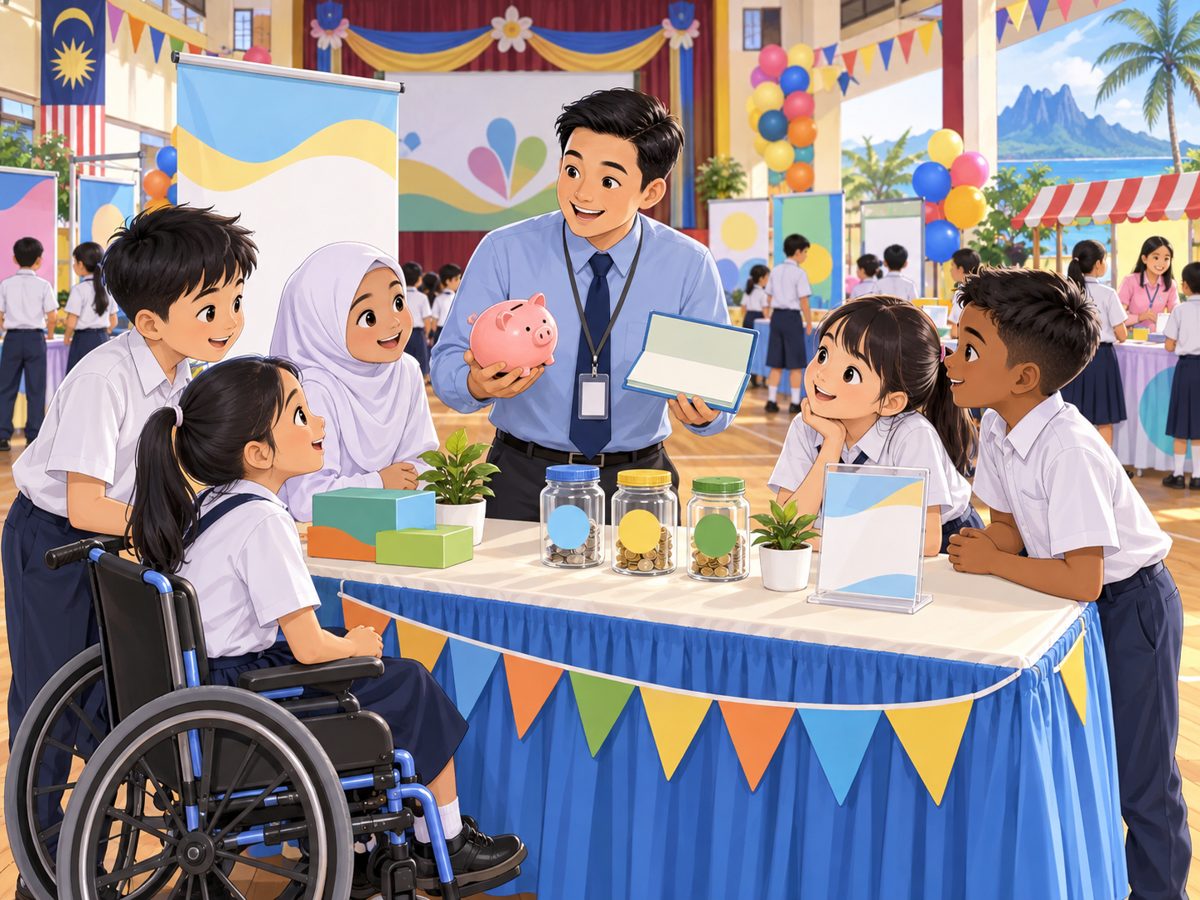
Nabil mendapat wang saku RM 20 daripada nenek. Dia mahu membeli makanan, sebuah mainan, menyimpan sedikit dan menderma. Bagaimanakah dia patut membahagikan wangnya?
money sense = celik wang; need = keperluan; want = kehendak; savings = simpanan; donation = derma
This unit is not about sums but about using money wisely. Nabil has RM 20 pocket money and wants food, a toy, a little saving and a donation. We learn to tell needs from wants, to pay for needs first and think about wants later, and to always keep part of the money as savings, with some to help people in need.
Example: lunch is a need; a third toy car is a want.
Watch out: once money is spent it is gone, so think before you spend.
Keperluan
Apa yang mesti ada?
Makanan, pakaian, tempat tinggal, ubat, alat sekolah
makan & minum
nasi, air
pakaian
baju, kasut sekolah
tempat tinggal
rumah
kesihatan
ubat
sekolah
buku, pensel
Keperluan = mesti ada untuk hidup sihat dan belajar
需要 = keperluan;必须有 = mesti ada
需要是活着和上学一定要有的东西:吃的喝的、衣服鞋子、住的地方、生病时的药、上学用的书和文具。没有这些,生活和学习就会有困难。所以用钱时,需要的东西排在最前面。
例子:校鞋破了要换新的,这是需要。
注意:需要是“没有不行”,不是“有了更好”。
need = keperluan; must have = mesti ada
Needs are things we must have to live and to learn: food and drink, clothes and school shoes, a place to live, medicine when we are sick, and books and stationery for school. Without them, living and learning become hard. So when spending money, needs come first.
Example: replacing torn school shoes is a need.
Watch out: a need is something we cannot do without, not something that is merely nice to have.
Kehendak
Apa yang kita mahu, tetapi boleh tunggu?
Mainan, jam tangan mahal, snek, permainan video
Keperluan
nasi untuk makan tengah hari
kasut sekolah
ubat demam
buku latihan
Kehendak
aiskrim selepas makan
kasut jenama mahal
mainan baharu
permainan video
Kehendak = mahu, tetapi boleh tunggu
想要 = kehendak;可以等 = boleh tunggu
想要的东西是让生活更开心、更舒服,但没有也能活:新玩具、名贵手表、零食糖果、电子游戏。两边对比就清楚了:午饭的饭是需要,饭后的冰淇淋是想要;普通校鞋是需要,名牌鞋是想要。想要的东西可以等,等需要的都付了、还有多余的钱再说。
例子:同一双鞋,上学必须穿的是需要,为了好看多买一双是想要。
注意:贵的东西不一定是需要,便宜的东西也不一定是想要。
want = kehendak; can wait = boleh tunggu
Wants make life more fun or comfortable, but we can live without them: a new toy, an expensive watch, snacks and sweets, video games. Comparing side by side makes it clear: rice for lunch is a need, ice cream after lunch is a want; plain school shoes are a need, branded shoes are a want. Wants can wait until the needs are paid for and there is money to spare.
Example: the pair of shoes you must wear to school is a need; an extra pair just for looks is a want.
Watch out: an expensive item is not automatically a need, and a cheap one is not automatically a want.
spotting a need = kenal pasti keperluan
Medicine for a fever is a need, because without it the illness will not get better. A branded watch is costly, but we can tell the time without it, so it is a want. Sweets taste nice, but we are fine without them, so they are a want too.
Example: glasses because you cannot see clearly are a need; a second pair in a prettier colour is a want.
Watch out: when asked which is a need, look for the one whose absence would harm your health or your learning.
Utamakan keperluan
RM 20: bahagi dengan bijak
Keperluan dahulu → simpan → derma → kehendak
1. keperluan
makan RM 8
2. simpanan
tabung RM 5
3. derma
RM 2
4. kehendak
mainan RM 5
8 + 5 + 2 + 5 = RM 20 · belanja tidak lebih daripada wang yang ada
putting first things first = utamakan; living within your means = belanja ikut kemampuan
Nabil splits his RM 20 like this: lunch RM 8 first because it is a need, then RM 5 into the savings box, RM 2 as a donation, and the last RM 5 for a want such as a small toy. 8 + 5 + 2 + 5 = 20, exactly the money he has, with no overspending. The order matters: needs first, wants last, and in between remember to save a little and give a little.
Example: if the toy costs RM 12 the money is not enough, so wait for next time; never buy the toy and skip lunch.
Watch out: never spend more than you have; that is living within your means.
Cuba
Aina ada RM 10. Dia lapar dan belum makan. Dia juga mahu pelekat kartun. Apakah yang patut dia buat dahulu?
先做什么 = buat dahulu
Aina 饿了还没吃,食物是需要;卡通贴纸是想要。所以她应该先买食物。把 RM 10 全部花在两样上也不对,因为要留一些存起来,而且先要确定需要的够不够。
例子:先买 RM 4 的面,剩下的再想贴纸和储蓄。
注意:肚子饿是身体的需要,想要的东西永远可以等一等。
what to do first = buat dahulu
Aina is hungry and has not eaten, so food is a need; cartoon stickers are a want. She should buy food first. Spending the whole RM 10 on both is also wrong, because some should be kept as savings and the need must be covered first.
Example: buy RM 4 of noodles first, then think about stickers and savings with what is left.
Watch out: hunger is a need of the body; a want can always wait a little.
savings = simpanan; investment = pelaburan; money box = tabung; bank account = akaun bank
Savings are money we keep instead of spending, in a money box at home or in a savings account at the bank, to use later. Saving RM 2 a day gives RM 60 after 30 days. An investment is saving for the far future, such as an education fund; the money is left for a long time so that it grows little by little. The difference: savings are for soon, investments are for many years ahead.
Example: saving for next term's school bag is savings; parents putting money aside for university fees is an investment.
Watch out: save first and spend what is left, not the other way round, because what is left is often nothing.
spotting an investment = kenal pasti pelaburan
An education fund saved for future studies, left for many years, is an investment. Buying snacks every day is spending, not saving. A money box for a toy next week is short-term saving, not investment.
Example: putting a little into a child's education account every month to use ten years later is an investment.
Watch out: the key to an investment is that the money is used a long time later.
Derma
Berkongsi dengan yang memerlukan
Mangsa banjir, rumah anak yatim, orang kurang upaya
mangsa bencana
banjir, kebakaran
rumah anak yatim
kanak-kanak tanpa ibu bapa
orang kurang upaya
perlu bantuan
pesakit
tidak mampu bayar rawatan
Derma = memberi tanpa mengharap balasan · sedikit pun bermakna
donation = derma; caring = prihatin; without expecting a return = tanpa mengharap balasan
A donation is giving part of our money to people who need help, without asking for anything back. We can give to flood or fire victims, orphanages, people with disabilities, and patients who cannot afford treatment. The amount does not matter; RM 1 or RM 2 still counts, because what matters is caring for others.
Example: the school collects money for flood victims and Nabil gives RM 2.
Watch out: a donation goes to people in need, not to buying a present for a friend.
Padankan
Jenis penggunaan wang
四种用钱方式 = empat jenis penggunaan wang
买午饭的饭是需要(keperluan);买机器人玩具是想要(kehendak);把 RM 5 放进扑满是储蓄(simpanan);给水灾灾民 RM 2 是捐款(derma)。配对时问自己:这是必须的吗?只是想要吗?是留着不花吗?是给别人吗?
例子:买退烧药 → keperluan;存钱 → simpanan。
注意:存进扑满的钱还是自己的;捐出去的钱是给别人的,这是两者的分别。
four ways of using money = empat jenis penggunaan wang
Buying rice for lunch is a need (keperluan); buying a robot toy is a want (kehendak); putting RM 5 into a money box is saving (simpanan); giving RM 2 to flood victims is a donation (derma). Ask yourself for each: is it a must? just a wish? kept aside? given away?
Example: buying fever medicine → keperluan; keeping money → simpanan.
Watch out: money in a money box is still yours; donated money goes to someone else, and that is the difference.
Cuba
Kepada siapakah derma patut diberikan?
捐给谁 = kepada siapa derma
孤儿院的孩子没有父母照顾,真正需要帮助,捐款应该给他们。朋友想买电子游戏是他的想要,不是需要,不算捐款。给自己买零食更不是捐款,那是花钱。
例子:火灾灾民、生病付不起医药费的人,都是捐款的对象。
注意:捐款的重点是“对方需要帮助”。
who should receive a donation = kepada siapa derma
Children in an orphanage have no parents to care for them and truly need help, so a donation should go to them. A friend who wants a video game has a want, not a need, so that is not a donation. Buying snacks for yourself is simply spending.
Example: fire victims and patients who cannot pay for treatment are people a donation can help.
Watch out: the point of a donation is that the other person needs help.
Ringkasan
Syabas!
keperluan dahulu → simpan → derma → kehendak
Keperluan ialah benda yang mesti ada. Kehendak boleh tunggu. Simpan sedikit setiap hari dalam tabung atau bank; pelaburan ialah simpanan untuk masa depan. Derma kepada yang memerlukan. Jangan belanja lebih daripada wang yang ada.