Unit 12
Kerjasama Budaya Kami
Pada hari Sabtu, murid Tahun 3, guru dan Pak Cik Salleh, tukang kebun, bergotong-royong di kebun sayur sekolah.
Ada yang mencabut rumput, ada yang menyiram, ada yang menanam anak pokok.
Nilai: Kerjasama
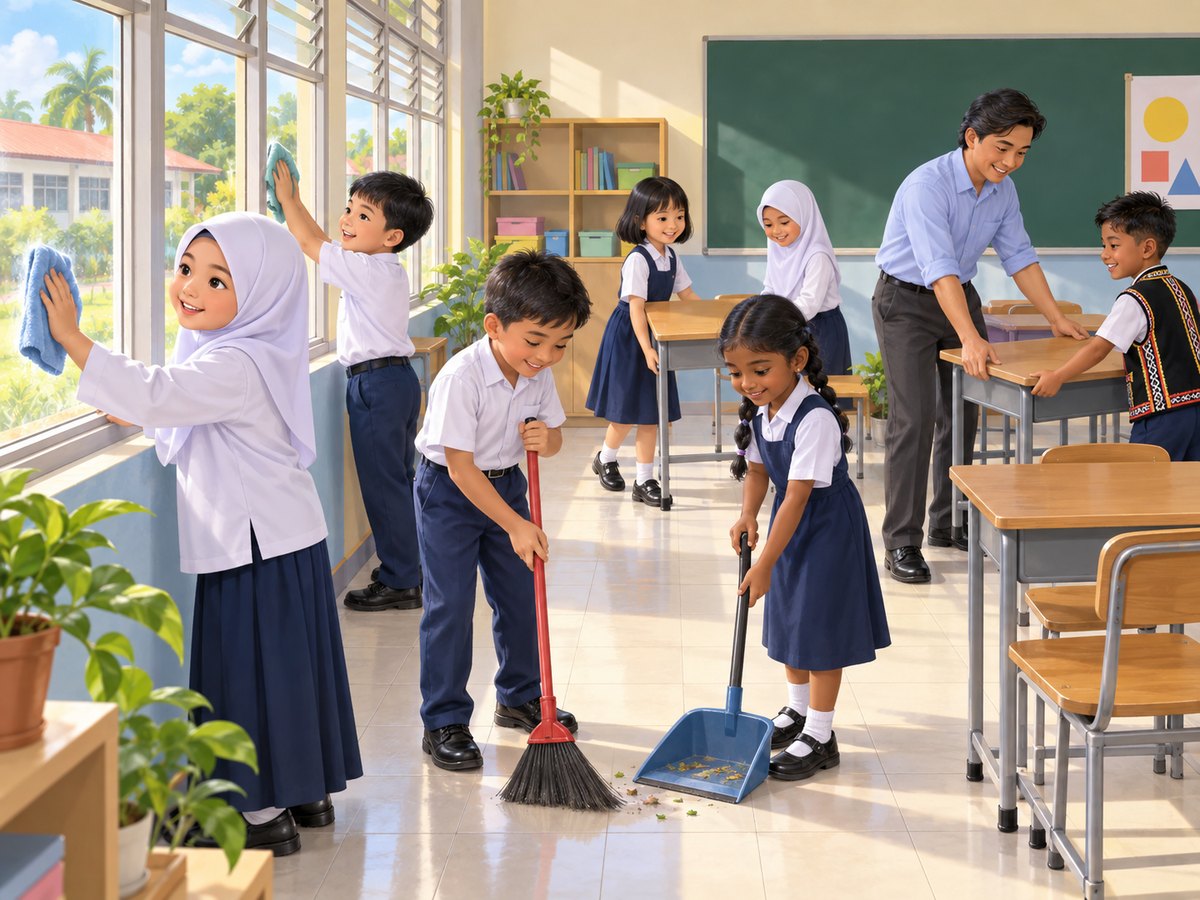
合作 = Kerjasama;大扫除/一起劳动 = bergotong-royong
这一课的价值是合作。星期六,三年级学生、老师和园丁 Salleh 伯伯一起整理学校菜园:有人拔草、有人浇水、有人种菜苗。大家各做一份,本来要做一整天的工作,一个早上就完成了。课题 Kerjasama Budaya Kami 的意思是:合作是我们学校的好习惯。
例子:全班一起搬桌椅布置考场,十分钟就排好了。
注意:合作的对象不只是同学,也包括老师、园丁、食堂员工和保安。
cooperation = Kerjasama; working together on a clean-up = bergotong-royong
The value in this unit is cooperation. On Saturday, Year 3 pupils, their teachers and Pak Cik Salleh the gardener tidy the school vegetable garden together: some pull weeds, some water and some plant seedlings. Because everyone takes a share, a whole day's work is done in one morning. The title Kerjasama Budaya Kami means cooperation is a habit of our school.
Example: the whole class moves desks for an exam and finishes in ten minutes.
Watch out: we cooperate not only with classmates but also with teachers, gardeners, canteen workers and guards.
Konsep
Apakah itu kerjasama?
Bekerja bersama-sama untuk mencapai tujuan yang sama
Berbincang
Bersetuju dahulu tentang apa yang hendak dibuat.
Pembahagian tugas
Setiap orang dapat satu kerja.
Menyokong
Bantu rakan yang lambat atau kesusahan.
Siapkan bersama
Tiada siapa tinggalkan kerja separuh jalan.
商量 = Berbincang;分工 = Pembahagian tugas;互相接住 = Menyokong;一起完成 = Siapkan bersama
合作就是大家为同一个目标一起做事。它有四个步骤:先商量要做什么;再分工,每人负责一部分;做的时候互相接住,看到同伴来不及就帮一把;最后一起完成,没有人做到一半就跑掉。
例子:布置壁报时,先一起决定主题,再分配谁画图、谁写字、谁剪纸。
注意:分工不是“做完自己那份就不管了”,整件事完成才算合作成功。
discuss = Berbincang; division of work = Pembahagian tugas; back each other up = Menyokong; finish together = Siapkan bersama
Cooperation means working together for one shared goal. It has four steps: first discuss what to do, then divide the work so each person has a part, back each other up by helping anyone who falls behind, and finally finish together without anyone leaving halfway.
Example: for a notice board, the group agrees on a theme first, then decides who draws, who writes and who cuts paper.
Watch out: dividing work does not mean stopping once your own part is done; it only succeeds when the whole task is complete.
Konsep
Antara berikut, yang manakah menunjukkan kerjasama?
认出合作 = mengenal pasti kerjasama;食堂员工 = pekerja kantin
活动结束后,学生和食堂员工一起把桌子排好,大家都出了力,这就是合作。只有一个人在排、其他人在旁边看,是把工作丢给别人;抢着回家、桌子没人排,更是完全没有合作。
例子:运动会后,学生帮老师收起号码牌和绳子。
注意:合作要“大家一起动手”,只站着看不算参与。
identify cooperation = mengenal pasti kerjasama; canteen worker = pekerja kantin
After an event, pupils and canteen workers arranging the tables together all contribute, so that is cooperation. One pupil doing everything while friends watch is leaving the job to someone else, and rushing home with the tables still out shows no cooperation at all.
Example: after Sports Day, pupils help the teachers collect number bibs and ropes.
Watch out: cooperation needs everyone's hands; standing and watching is not taking part.
Pengukuhan
Bekerjasama dengan warga sekolah
Banyak aktiviti di sekolah menjadi mudah apabila kita bekerjasama
Rakan sekelas
Menghias sudut bacaan kelas.
Guru
Menyusun kerusi untuk Hari Sukan.
Pengawal keselamatan
Beratur dengan tertib semasa pulang.
Tukang kebun
Menyiram pokok di taman sekolah.
学校成员 = warga sekolah;保安 = pengawal keselamatan;园丁 = tukang kebun
学校里有很多可以合作的人:和同班同学一起布置阅读角;帮老师为运动会排椅子;放学时听保安的指示排好队,让他容易照顾大家;帮园丁给花园的植物浇水。合作让每一个人的工作都变轻松。
例子:Kavitha 和 Wong 一起把旧故事书贴上标签,阅读角很快就开放了。
注意:配合保安或园丁的指示,也是一种合作,不一定要搬东西才算。
school members = warga sekolah; security guard = pengawal keselamatan; gardener = tukang kebun
There are many people at school we can cooperate with: decorating the reading corner with classmates, arranging chairs for Sports Day with teachers, lining up neatly at home time so the guard can look after everyone, and helping the gardener water the plants. Cooperation makes everyone's job lighter.
Example: Kavitha and Wong label old storybooks together, so the reading corner opens quickly.
Watch out: following a guard's or gardener's instructions is also cooperation; it does not always mean carrying things.
Pengukuhan
Kumpulan Siti menghias papan kenyataan. Wong pandai melukis, Siti bertulisan cantik, Aiman suka menggunting. Cara terbaik?
按专长分工 = bahagikan tugas ikut kebolehan;壁报 = papan kenyataan
Siti 这组要布置壁报,组员各有所长:Wong 会画画,Siti 字写得漂亮,Aiman 喜欢剪纸。按专长分工,每人做擅长的部分,作品又快又好看。组长一个人包办会累坏又慢;各做各的、不商量,壁报就会乱七八糟。
例子:做环保海报时,会算数的同学负责统计回收了多少瓶子。
注意:组长的工作是安排和帮忙,不是一个人把所有事做完。
divide work by ability = bahagikan tugas ikut kebolehan; notice board = papan kenyataan
Siti's group is decorating a notice board, and each member has a strength: Wong draws well, Siti has neat handwriting and Aiman likes cutting. Giving each person the part they are good at makes the work quick and attractive. A leader doing everything alone gets tired and slow, and working separately without discussion makes a messy board.
Example: for a recycling poster, the pupil good with numbers counts how many bottles were collected.
Watch out: a leader's job is to organise and help, not to do every task alone.
Pengukuhan
Mengapa perlu bekerjasama?
Berat sama dipikul, ringan sama dijinjing
Jimat masa dan tenaga
Kerja besar cepat siap.
Hubungan erat
Murid, guru dan pekerja sekolah lebih mesra.
Perasaan
Seronok dan bangga apabila berjaya bersama.
Peribahasa
Berat sama dipikul, ringan sama dijinjing
= susah dan senang dikongsi bersama.
= susah dan senang dikongsi bersama.
节省时间 = menjimatkan masa;感情深厚 = hubungan erat;谚语 = peribahasa
合作有三个好处:工作变轻,省时间也省力气;学生、老师和员工的感情更好;一起成功时心里开心又骄傲。马来谚语 berat sama dipikul, ringan sama dijinjing 字面是“重的一起扛,轻的一起提”,意思是有难同当、有福同享。
例子:一张大桌子一个人搬不动,四个人各抬一角就轻松了。
注意:这句谚语讲的是“苦和乐都一起分担”,不是只在轻松的时候才一起做。
save time = menjimatkan masa; close relationship = hubungan erat; proverb = peribahasa
Cooperation brings three benefits: work gets lighter and saves time and energy, pupils, teachers and staff grow closer, and succeeding together makes everyone happy and proud. The Malay proverb berat sama dipikul, ringan sama dijinjing literally says heavy loads are carried together and light ones too; it means hard times and good times are shared.
Example: one person cannot move a big table, but four people each lifting a corner manage easily.
Watch out: the proverb is about sharing both hard and easy times, not only joining in when the work is light.
Peribahasa
Apakah maksud peribahasa berat sama dipikul, ringan sama dijinjing?
谚语的意思 = maksud peribahasa
这句谚语用“扛重物、提轻物”来比喻生活里的难事和好事。真正的意思是:困难和快乐都要一起分担,不是叫你一个人搬重东西,也不是说只有力气大的人才能工作。在学校,大扫除辛苦时一起做,比赛得奖时也一起开心,就是实践这句谚语。
例子:班上筹备义卖时一起忙,赚到钱后一起捐给慈善团体。
注意:谚语常常不是字面意思,要想它比喻的是什么。
meaning of a proverb = maksud peribahasa
This proverb uses carrying heavy and light loads as a picture of the hard and good things in life. Its real meaning is that difficulties and joys are both shared; it does not tell you to carry heavy things alone or say only strong people can work. At school, doing a tiring clean-up together and celebrating a prize together both put the proverb into practice.
Example: the class works hard together on a charity sale and then donates the money together.
Watch out: proverbs are often not literal, so think about what the picture stands for.
Pemulihan
Padankan amalan kerjasama dengan hasilnya
做法和结果 = amalan dan hasil
这里把合作的四个做法和它们带来的结果配对。先商量,每个人都清楚计划;分工,工作就快完成;帮助慢的同伴,就没有人被落下;一起把事情做完,大家都会感到骄傲。四个做法连起来,就是一次成功的合作。
例子:做小组实验前先商量谁量水、谁记录,做的时候就不会乱。
注意:配对时可以从关键词入手,例如“分工”对“快”,“帮助”对“没人落后”。
practice and result = amalan dan hasil
Here you match four cooperation habits with the results they bring. Discussing first means everyone understands the plan; dividing tasks gets the job done quickly; supporting a slow member means nobody is left behind; finishing together lets everyone feel proud. Linked together, the four habits make a successful team effort.
Example: before a group experiment, agree on who measures water and who records, so nothing gets muddled.
Watch out: use key words to help, such as dividing work with fast, and supporting with nobody left behind.
Pemulihan
Kumpulan Ravi membuat kad Hari Guru. Susun langkah kerjasama mengikut urutan.
步骤顺序 = urutan langkah;教师节卡片 = kad Hari Guru
Ravi 这组要做教师节卡片。合理的顺序是:先商量卡片的样子和要写的话;再分工,谁画、谁写、谁贴装饰;接着大家一起把卡片完成;最后一起交给老师。还没商量就分工,组员会不知道要做什么;还没完成就不能交。
例子:准备班级生日会时,也是先商量、再分工、一起布置、最后一起庆祝。
注意:排错了按 Padam 重来;想一想每一步要先有什么才能做。
order of steps = urutan langkah; Teachers' Day card = kad Hari Guru
Ravi's group is making a Teachers' Day card. The sensible order is: discuss the design and message first, then divide the jobs of drawing, writing and decorating, then finish the card together, and finally hand it to the teacher together. Dividing work before discussing leaves members unsure what to do, and you cannot hand over an unfinished card.
Example: a class birthday party also goes discuss, divide jobs, decorate together, then celebrate together.
Watch out: press Padam to start over, and ask what must already be done before each step can happen.
Pengayaan
Kumpulan Mei Ling membina model kapal daripada kotak. Jason hanya duduk dan tidak membantu. Apakah tindakan yang betul?
邀请参与 = mengajak;角色 = peranan
Mei Ling 这组用纸箱做船的模型,Jason 却一直坐着不帮忙。正确做法是友善地邀请他,给他一份适合的工作,例如剪窗户或涂颜色。不理他,他永远学不会合作;骂他、赶他走,会伤感情,小组也少了一个帮手。
例子:“Jason,你画画很好看,可以帮我们画船上的旗子吗?”
注意:有人不参与,可能是害羞或不知道做什么,先问清楚再安排。
invite = mengajak; role = peranan
Mei Ling's group is building a model ship from boxes, but Jason just sits without helping. The right step is to invite him kindly and give him a suitable job, such as cutting windows or colouring. Ignoring him means he never learns to cooperate, while scolding him or sending him away hurts feelings and loses a helper.
Example: Jason, you draw nicely; could you draw the flag for our ship?
Watch out: someone who does not join in may be shy or unsure what to do, so ask first, then give a task.
Pengayaan
Semasa gotong-royong kelas, ramai murid lari bermain di padang. Apakah akibatnya?
不合作的后果 = akibat tidak bekerjasama
班级大扫除时很多人跑去操场玩,留下来的人少,工作就拖得很久,留下的同学又累又不开心。人少了,课室不会更快变干净;有人偷懒、有人辛苦,大家的感情反而会变差,而不是更亲近。
例子:十个人的工作只剩三个人做,原本半小时做完的事要做一个多小时。
注意:先把工作一起做完,再一起去玩,大家都开心。
result of not cooperating = akibat tidak bekerjasama
During the class clean-up, many pupils ran off to play on the field. With fewer people left, the work drags on and those who stayed become tired and unhappy. Fewer workers cannot clean the room faster, and when some slack off while others struggle, friendships suffer instead of growing closer.
Example: a job meant for ten people left to three takes over an hour instead of half an hour.
Watch out: finish the work together first, then play together, and everyone stays happy.
Penilaian
Ahli Kelab Pencinta Alam dan tukang kebun mahu menanam 30 anak pokok di tepi padang. Mengapakah mereka patut bekerjasama?
环保俱乐部 = Kelab Pencinta Alam;树苗 = anak pokok
俱乐部会员和园丁要在操场边种三十棵树苗,这是一份大工作。一起合作,有人挖洞、有人放苗、有人浇水,工作就快完成,大家的感情也更好。合作不是把工作全推给学生让园丁休息,也不是变成比赛抢快,那样容易种得乱、伤到树苗。
例子:两个人一组,一人扶着树苗,一人把泥土填好压实。
注意:答“为什么要合作”时,可以说省时间、省力气、增进感情这几个重点。
nature club = Kelab Pencinta Alam; seedlings = anak pokok
Club members and the gardener want to plant thirty seedlings along the field, which is a big job. Working together, with some digging, some placing seedlings and some watering, finishes it quickly and brings everyone closer. Cooperation does not mean pupils doing everything so the gardener can rest, nor turning it into a speed race, which leads to messy planting and damaged seedlings.
Example: in pairs, one holds the seedling while the other fills in and presses the soil.
Watch out: when asked why we cooperate, mention saving time, saving energy and closer relationships.
Ringkasan
Syabas!
Kerjasama budaya kami
Berbincang, bahagikan tugas, menyokong rakan dan siapkan bersama. Kerjasama menjimatkan masa dan tenaga serta mengeratkan hubungan warga sekolah.
Kembali ke Saya dan Sekolah →