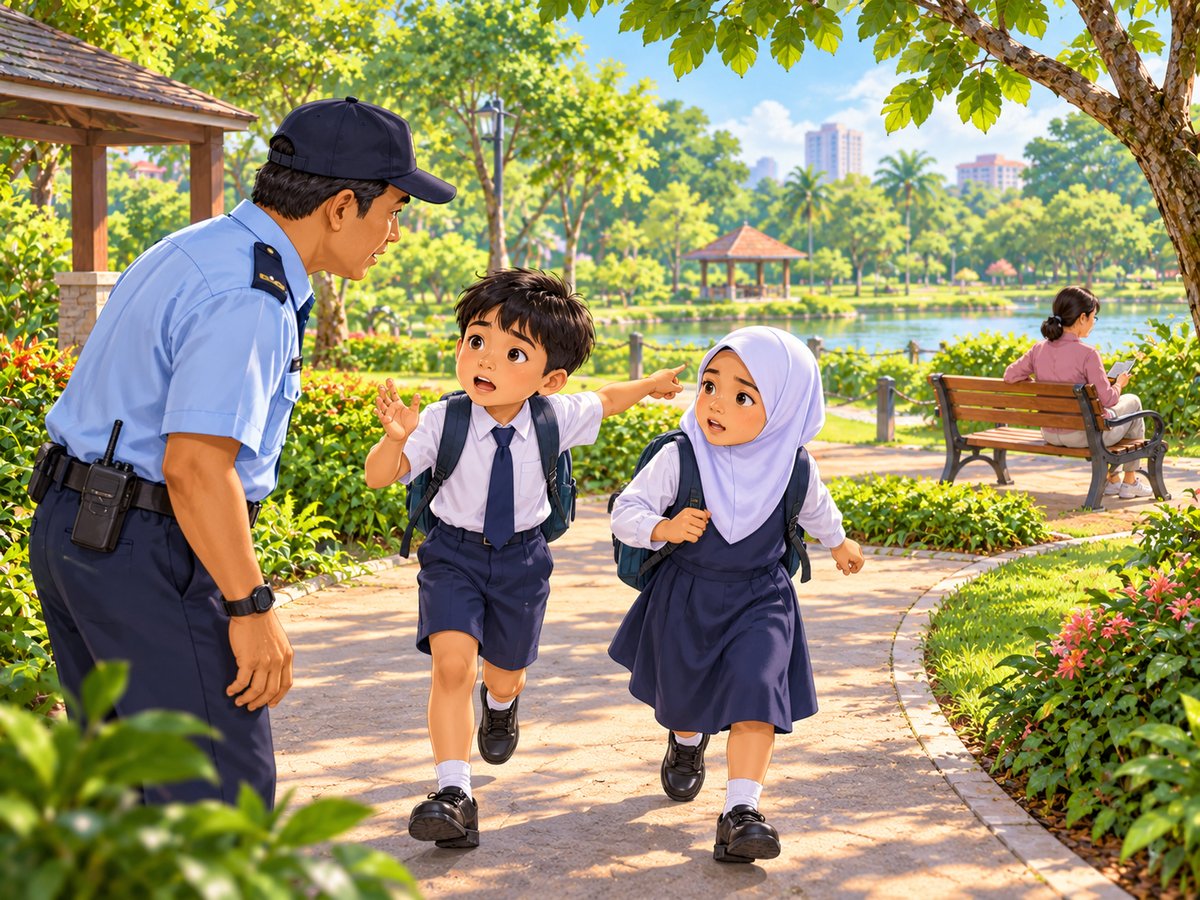
courage = keberanian; challenge = cabaran; speech contest = pertandingan pidato
This unit is about facing challenges bravely at school. Kavitha is chosen to represent the school in a speech contest for the first time. Her heart is racing, but she does not give up and decides to try. Courage does not mean feeling no fear; it means doing the right thing and trying even while afraid.
Example: you do not understand the lesson, so you gather the nerve to raise your hand and ask.
Watch out: courage is not taking risks; doing something dangerous to look bold is not bravery.
Konsep
Apakah maksud berani?
Berani bermaksud sanggup menghadapi cabaran dengan yakin
Cuba sekali
masuk pertandingan walaupun berdebar
Bertanya
angkat tangan apabila tidak faham
Melapor
beritahu guru tentang perbuatan salah
Cuba lagi
tidak berputus asa apabila gagal
试一次 = cuba sekali;求助 = minta bantuan;再来一遍 = cuba lagi
勇敢就是有信心去面对挑战和困难。勇敢的学生会:紧张也愿意参加比赛;不懂就举手发问;看见错误的行为敢告诉老师;失败了不放弃,再试一次。这些都需要先克服心里的害怕。
例子:Daniel 第一次跳远没跳好,第二天又去练习。
注意:遇到解决不了的事,向大人求助也是勇敢的表现,不是胆小。
give it a try = cuba sekali; ask for help = minta bantuan; try again = cuba lagi
Courage means facing challenges and hardships with confidence. A brave pupil enters a contest despite nerves, raises a hand to ask when confused, tells a teacher about wrongdoing, and tries again after failing. Each of these first needs us to overcome the fear inside.
Example: Daniel's first long jump goes badly, so he practises again the next day.
Watch out: asking an adult for help with a problem you cannot solve is also brave, not cowardly.
ask = bertanya; dangerous = berbahaya
Raising your hand to ask the teacher when you are confused means overcoming the fear of being laughed at, and it helps your learning, so it is real courage. Climbing the school fence to fetch a ball is dangerous, could cause a fall and breaks school rules; that is risk-taking, not bravery. Staying silent for fear of laughter lets the fear win.
Example: Mei Ling says, Cikgu, saya belum faham langkah kedua.
Watch out: if a ball goes over the fence, ask the guard or a teacher to get it.
Pengukuhan
Berani kerana benar
Melaporkan buli kepada guru
Apa yang Wong nampak
Dua murid tahun enam memaksa Aiman memberikan wang sakunya di belakang kantin.
Tindakan Wong
tidak bergaduh, terus lapor kepada guru bertugas
Hasilnya
guru menyelesaikan masalah, Aiman selamat
Perasaan Wong
lega dan gembira
欺凌 = buli;值日老师 = guru bertugas;松一口气 = lega
休息时,Wong 看见两个六年级学生逼 Aiman 交出零用钱。Wong 很害怕,可是他知道这是错的。他没有冲上去打架,而是马上去告诉值日老师,老师来了把事情解决。勇敢地说出真相,帮了同学,也让学校更安全,Wong 心里也放下了。
例子:如果找不到值日老师,也可以告诉附近任何一位老师或校工。
注意:面对欺凌,保护好自己、马上报告大人,才是聪明又勇敢的做法。
bullying = buli; teacher on duty = guru bertugas; relieved = lega
During recess, Wong sees two Year 6 pupils forcing Aiman to hand over his pocket money. Wong is scared, but he knows it is wrong. Instead of rushing in to fight, he quickly tells the teacher on duty, who comes and sorts it out. Bravely speaking up helps a friend and makes the school safer, and Wong feels relieved.
Example: if the duty teacher cannot be found, tell any nearby teacher or school worker.
Watch out: when facing bullying, keeping yourself safe and reporting to an adult right away is both wise and brave.
Pengukuhan · Cuba
Mengapakah tindakan Wong betul?
Situasi
Wong nampak Aiman dibuli. Wong tidak bergaduh, tetapi terus melapor kepada guru bertugas.
报告 = melapor;安全地 = dengan selamat
Wong 去报告,是因为老师有能力安全地制止欺凌,保护 Aiman,也让欺负人的学生改正。他不是为了看别人被骂,也不是为了显示自己厉害。勇敢的出发点要是对的:为了帮助别人、维护学校。
例子:老师之后请辅导老师和这两个学生谈话,帮助他们改过。
注意:被欺负的人如果是你自己,也一样要勇敢地告诉老师或家长,不要默默忍受。
report = melapor; safely = dengan selamat
Wong reported it because a teacher can stop the bullying safely, protect Aiman and help the bullies change their ways. He did not do it to watch someone get scolded or to show he is tough. Courage needs the right reason behind it: helping others and caring for the school.
Example: the teacher later asks the counselling teacher to talk with the two pupils and help them change.
Watch out: if you are the one being bullied, be brave too and tell a teacher or parent instead of suffering in silence.
Pengukuhan
Berani hadapi cabaran
Cabaran → cara → hasil
Cabaran
Cara
Hasil
Tidak faham pelajaran
bertanya kepada guru
faham dan yakin
Tiada gelanggang badminton
minta izin berlatih di dewan
dapat berlatih
Air bertakung, banyak nyamuk
lapor kepada guru
kawasan dibersihkan
挑战 = cabaran;做法 = cara;结果 = hasil
这一屏用三栏来看挑战怎么解决。第一,上课听不懂,就问老师,结果听懂了。第二,羽球队没有球场,就申请在礼堂练习,结果可以继续练。第三,课室后面积水、蚊子多,就报告老师,结果那里被清理干净。每个困难都有办法,关键是敢去面对。
例子:图书馆的书太高拿不到,请图书管理员帮忙。
注意:想办法时要用对的、守规矩的方法,不可以偷偷做违反校规的事。
challenge = cabaran; way = cara; result = hasil
This screen uses three columns to show how challenges get solved. First, a pupil does not understand the lesson, asks the teacher, and then understands. Second, the badminton team has no court, asks permission to train in the hall, and can keep practising. Third, stagnant water behind the class breeds mosquitoes, pupils report it, and the area is cleaned. Every difficulty has a way out; the key is daring to face it.
Example: a library book is too high to reach, so you ask the librarian for help.
Watch out: solve problems in proper ways that follow the rules, never by secretly breaking school rules.
Pemulihan
Padankan cabaran dengan cara
集会 = perhimpunan;先请示 = minta izin dahulu
这一屏把挑战和正确的勇敢做法配对。怕在集会上讲话,可以先在家人面前练习;要用学校的电脑找资料,先请老师批准;比赛输了,明年再来;看到同学被欺负,马上告诉老师。每个做法都安全、守规矩,而且真的能解决问题。
例子:画海报要上网找参考,Ravi 先问老师可不可以用电脑室。
注意:用学校电脑没有经过允许,就算目的是好的,也不对。
assembly = perhimpunan; ask permission first = minta izin dahulu
This screen pairs each challenge with the right brave response. Scared of speaking at assembly? Practise in front of family first. Need the school computer for research? Ask the teacher for permission first. Lost a contest? Try again next year. See a friend bullied? Tell a teacher at once. Each response is safe, follows the rules and actually solves the problem.
Example: to find ideas for a poster online, Ravi first asks whether he may use the computer lab.
Watch out: using a school computer without permission is wrong, even for a good purpose.
preparation = persediaan; guidance = bimbingan; on stage = di pentas
Preparing for a contest follows an order: choose the topic first so you know what to prepare, then ask the teacher for guidance to polish the speech and pronunciation, next practise every day to build confidence, and finally deliver the speech on stage on the day. Doing it out of order, such as practising daily before picking a topic, wastes time.
Example: Kavitha practises in front of a mirror for ten minutes after school each day.
Watch out: feeling nervous before a contest is normal; take a few deep breaths, then begin slowly.
Pengayaan
Apakah tindakan yang betul?
Situasi
Loceng sudah berbunyi. Pekerja kantin memberitahu Nurul, seorang pengawas, ada murid masih bermain di belakang kantin.
学长 = pengawas;纪律老师 = guru disiplin;尽责 = menjalankan tugas
Nurul 是学长,食堂员工告诉她有学生钟响了还在食堂后面玩。她应该勇敢地有礼貌提醒他们回课室,并报告纪律老师。怕对方生气就装作不知道,是没有尽到责任;跟着一起玩更是犯错。勇敢地做好分内的事,学校才有秩序。
例子:Nurul 说“Loceng sudah berbunyi. Mari masuk kelas sekarang.”
注意:提醒时语气要坚定但有礼貌,不要骂人或推人。
prefect = pengawas; discipline teacher = guru disiplin; carry out duties = menjalankan tugas
Nurul is a prefect, and a canteen worker tells her some pupils are still playing behind the canteen after the bell. She should bravely and politely remind them to go back to class and report it to the discipline teacher. Pretending not to know because they might get angry means failing her duty, and joining them is wrong. Doing your duty bravely keeps the school in order.
Example: Nurul says, Loceng sudah berbunyi. Mari masuk kelas sekarang.
Watch out: speak firmly but politely; never scold or push anyone.
Pengayaan
Apakah akibatnya jika Kavitha menarik diri?
Situasi
Sehari sebelum pertandingan, Kavitha berkata, “Saya takut. Saya mahu menarik diri.”
withdraw = menarik diri; opportunity = peluang
If Kavitha pulls out because she is afraid, she loses a chance to learn and grow, and a chance to bring honour to the school. She cannot possibly become champion without taking part, and she will not grow bolder at speaking in public without going on stage. Stepping back from fear is easy, but stepping forward bravely is how we improve.
Example: she wins no prize in her first contest, but Kavitha learns to speak loudly and clearly.
Watch out: what matters most in a contest is giving your best, not having to win.
Penilaian
Apakah tindakan yang berani dan betul?
Situasi
Beberapa kawan mengajak Daniel ponteng kelas dan keluar melalui pagar belakang sekolah.
逃课 = ponteng;拒绝 = menolak;坚定 = tegas
朋友约 Daniel 逃课从后门溜出去,这时最勇敢的做法是坚定地说“不”,然后回课室。很多人怕被说胆小才跟着去,其实敢拒绝坏事比跟着做更需要勇气。抢先爬围栏是危险又违反校规,根本不是勇敢。
例子:Daniel 说“Tak naklah. Saya nak masuk kelas.”然后转身走开。
注意:如果朋友真的逃出去了,为了他们的安全,要告诉老师。
skip class = ponteng; refuse = menolak; firmly = tegas
Friends invite Daniel to skip class and sneak out through the back fence. The bravest response is a firm no, then going back to class. Many pupils go along for fear of being called a coward, yet refusing something wrong takes more courage than following. Climbing the fence first is dangerous and against the rules, which is not bravery at all.
Example: Daniel says, Tak naklah. Saya nak masuk kelas, and walks away.
Watch out: if the friends really do slip out, tell a teacher for their safety.
Penilaian
Bagaimanakah perasaan Siti?
Situasi
Siti berani bertanya kepada guru tentang soalan yang sukar. Akhirnya dia faham.
confident = yakin; regretful = menyesal
Siti gathers her courage to ask the teacher and finally understands the hard question, so she feels confident and happy and will dare to ask again next time. She will not feel ashamed or regretful, because asking helped her improve, nor bored and sleepy, since learning something new is exciting. The good feeling from one brave act pushes us to be brave again.
Example: the next day, Siti helps her deskmate with the same kind of question.
Watch out: when asking, say exactly which part you do not understand so the teacher can help more easily.
Ringkasan
Syabas!
Berani menghadapi cabaran di sekolah.
Cuba sekali, bertanya, minta bantuan, lapor perbuatan salah dan cuba lagi. Berani yang betul ialah berani yang selamat.