Unit 22
Bijak Ekonomi
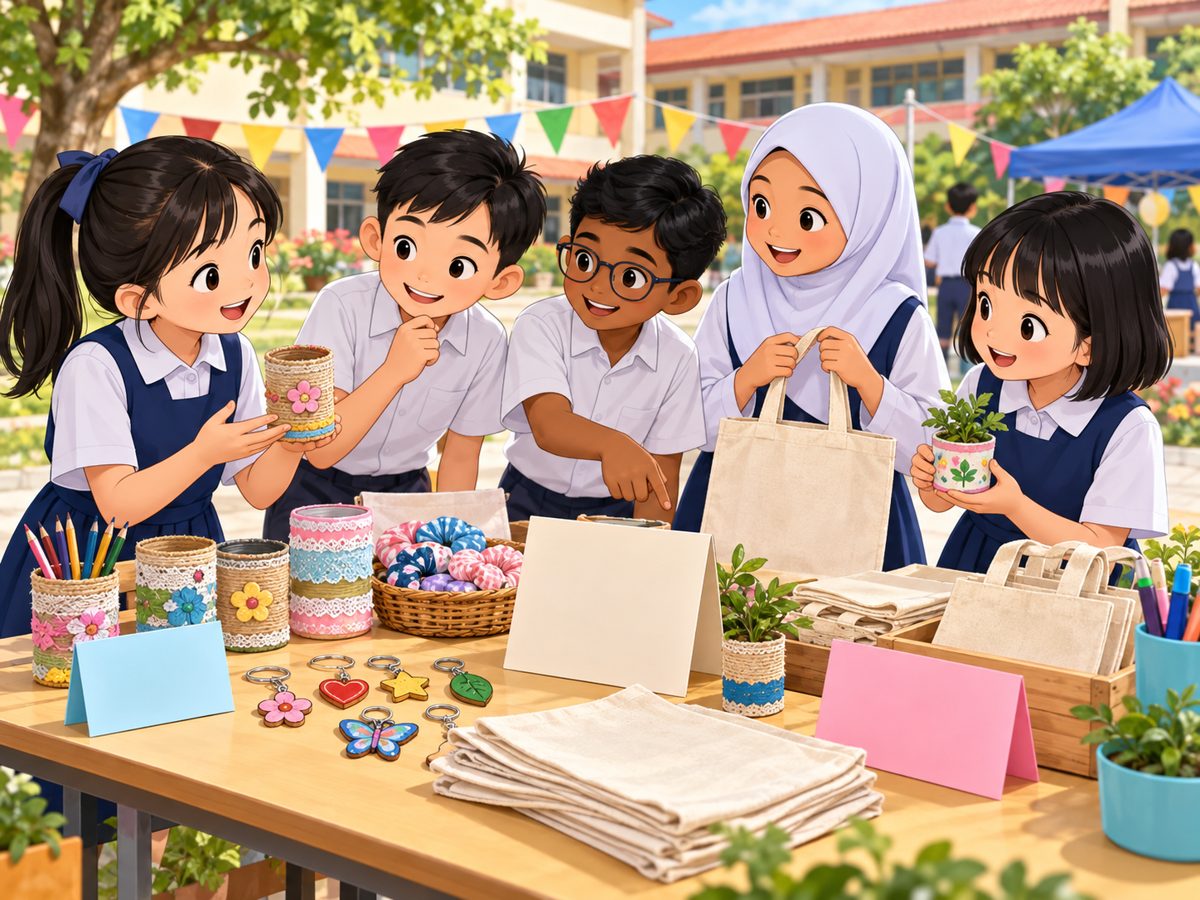
Orang yang bijak ekonomi berfikir sebelum berbelanja. Dia membandingkan harga dan kualiti, menggunakan kemudahan moden dengan betul dan menghargai usaha usahawan.
Dalam unit ini: memberi alasan, membaca arahan, kerangka karangan, kata dasar, kata berimbuhan dan kata majmuk.
精明 = bijak;品质 = kualiti;企业家 = usahawan
这一单元讲怎样做个精明的消费者:买东西前比较价钱和品质,会用自动售票机等现代设施,也认识用创意做生意的小老板。语法学词根、加前缀和后缀的词,以及合成词。
例子:两支一样好用的笔,选价钱合理的那支,省下的钱可以存起来。
注意:bijak ekonomi 不是什么都买最便宜的,而是买值得的。
wise = bijak; quality = kualiti; entrepreneur = usahawan
This unit is about being a smart spender: compare price and quality before buying, use modern facilities such as ticket machines properly, and meet small business owners who sell with creativity. In grammar we learn root words, words with prefixes and suffixes, and compound words.
Example: when two pens work equally well, choose the one with the fair price and save the difference.
Watch out: being wise with money does not mean always buying the cheapest; it means buying what is worth it.
Mendengar dan Bertutur
Bijak membeli
Bandingkan, kemudian beri alasan dengan sopan.
Botol Cergas
RM15
keluli tahan karat
air sejuk selama 12 jam
500 ml
keluli tahan karat
air sejuk selama 12 jam
500 ml
Botol Ceria
RM12
plastik
tidak menyimpan sejuk
750 ml
plastik
tidak menyimpan sejuk
750 ml
Ayah: Siti mahu botol yang mana?
Siti: Siti pilih Botol Cergas kerana kualitinya baik dan air kekal sejuk.
Ayah: Botol Ceria lebih murah dan lebih besar.
Siti: Maafkan Siti, ayah. Siti tidak memilih Botol Ceria kerana plastiknya mudah retak.
理由 = alasan;网店 = kedai dalam talian;价钱合理 = berpatutan
Siti 和爸爸在网店比较两个水壶:一个贵一点但品质好、能保冷;一个便宜又大,可是塑料容易裂。说选择时用 Saya pilih … kerana …;不同意大人时,先说 Maafkan saya,再礼貌讲理由。
例子:我选这双鞋,因为鞋底厚:Saya pilih kasut ini kerana tapaknya tebal。
注意:价钱合理不等于最便宜,要连品质一起看。
reason = alasan; online shop = kedai dalam talian; stainless steel = keluli tahan karat
Siti and her father compare two water bottles online: one costs more but is better made and keeps water cold; the other is cheaper and bigger, but its plastic cracks easily. To state a choice, say Saya pilih … kerana …; to disagree with an adult, start with Maafkan saya and then politely give the reason.
Example: Saya pilih kasut ini kerana tapaknya tebal means I choose these shoes because the soles are thick.
Watch out: a fair price (berpatutan) is not always the lowest price; look at quality too.
Mendengar dan Bertutur · Soalan 1
Ayat manakah memberi alasan dengan sopan?
有礼貌 = sopan;坚固 = kukuh;难看 = buruk
有礼貌的回答有两样东西:先说 maaf 或称呼对方,再用 kerana 说出理由。“只要这个,别再问!”没有理由,语气也很冲;说妈妈选的书包难看,会让妈妈难过。
例子:Maaf, ayah. Saya pilih baju biru kerana kainnya sejuk. 对不起爸爸,我选蓝衣服,因为布料凉快。
注意:意见不同没关系,但语气要温和。
polite = sopan; sturdy = kukuh; ugly = buruk
A polite reply has two parts: a word of apology or a respectful address, then a reason introduced by kerana. Saying I want only this and do not ask again gives no reason and sounds rude, and calling Mother's choice ugly would hurt her feelings.
Example: Maaf, ayah. Saya pilih baju biru kerana kainnya sejuk gives a polite choice with a reason.
Watch out: it is fine to disagree, but keep your tone gentle.
Membaca
Mesin layan diri
Membeli token Transit Laju Massa (MRT)
1
Sentuh skrin dan pilih stesen destinasi.
2
Pilih bilangan token.
3
Bayar dengan wang atau kad.
4
Ambil token dan baki wang.
"Berdasarkan pengalaman saya, mula-mula, kita perlu memilih stesen destinasi."
自助售票机 = mesin layan diri;代币车票 = token;找钱 = baki
Kumar 教 Fatin 在自助机买捷运代币:先在屏幕选要去的车站,再选要几个代币,然后用纸钞、硬币或卡付款,最后拿代币和找钱。说明步骤时,用 mula-mula、kemudian、selepas itu、akhirnya 串起来。
例子:Berdasarkan pengalaman saya 意思是“根据我的经验”。
注意:最后一步别忘了拿找钱。
self-service machine = mesin layan diri; MRT = Transit Laju Massa; travel token = token; change = baki
Kumar tells Fatin how to buy an MRT token from the machine: first choose the destination station on the screen, then choose how many tokens, next pay with notes, coins or a card, and finally collect the token and the change. Words like mula-mula, kemudian, selepas itu and akhirnya help us explain the steps.
Example: Berdasarkan pengalaman saya means based on my experience.
Watch out: do not forget to take your change at the last step.
Membaca · Soalan 2
Selepas memilih stesen destinasi di skrin mesin layan diri, apakah langkah seterusnya?
下一步 = langkah seterusnya;数量 = bilangan;火车 = tren
选好车站是第一步。机器接着要知道你买几个代币,才能算出要付多少钱,所以第二步是选数量。拿代币和找钱是最后一步;上火车更是买完票以后的事。
例子:买三个人的票,就在屏幕上按“3”。
注意:步骤颠倒,机器就不会给你代币。
next step = langkah seterusnya; number = bilangan; train = tren
Choosing the station is the first step. The machine then needs to know how many tokens you want so it can work out the price, so the second step is choosing the number. Collecting the token and change is the last step, and boarding the train comes after buying altogether.
Example: when buying for three people, press 3 on the screen.
Watch out: if the steps are mixed up, the machine will not give you a token.
Menulis
Kerangka karangan
Usahawan kuih denderam
Pendahuluan
Puan Zaiton seorang usahawan kuih denderam yang kreatif.
Isi 1
Dia membuat kuih segar setiap pagi.
Isi 2
Trak makanannya bergerak ke pasar dan taman permainan.
Isi 3
Dia mempromosikan kuih di media sosial.
Penutup
Kita perlu gigih dan kreatif seperti Puan Zaiton.
提纲 = kerangka;餐车 = trak makanan;勤奋 = gigih
写作文前先列提纲:开头介绍人物和事情,中间分几点写经过,结尾写感想或学到的道理。kuih denderam 是用米粉和椰糖做的传统糕点。Puan Zaiton 每天早上做新鲜的糕,开餐车到处卖,还在社交媒体宣传。
例子:一个重点写一段,三个重点就写三段。
注意:结尾不要再加新事情,要总结感想。
outline = kerangka; food truck = trak makanan; hardworking = gigih
Before writing an essay, plan an outline: the introduction presents the person and topic, the body gives the main points one by one, and the conclusion shares a feeling or lesson. Kuih denderam is a traditional snack made from rice flour and palm sugar. Puan Zaiton makes fresh kuih each morning, drives her food truck to customers, and promotes it online.
Example: one main point becomes one paragraph, so three points make three paragraphs.
Watch out: do not add new events in the conclusion; sum up your feelings instead.
Menulis · Soalan 3
Ayat manakah sesuai untuk penutup?
结尾 = penutup;佩服 = kagum;毅力 = kegigihan
结尾段要表达感想或学到的道理。“我佩服她的毅力”正是作者的感受。“每天早起”和“餐车是黄色的”都是故事中的事实,应该写在中间的段落。
例子:Saya berazam untuk berjimat cermat seperti nenek. 这句表示决心,也适合当结尾。
注意:结尾常用 kagum、berazam、pengajaran 这类词。
conclusion = penutup; admire = kagum; determination = kegigihan
The concluding paragraph shares a feeling or lesson. Saying I admire her determination is the writer's own feeling. Getting up early every morning and the truck's yellow colour are facts from the story, so they belong in the body paragraphs.
Example: a sentence promising to save money like Grandmother shows a resolution and also suits a conclusion.
Watch out: conclusions often use words like kagum, berazam or pengajaran.
Tatabahasa
Kata dasar dan kata berimbuhan
Wah, murahnya!
Aina: Wah, murahnya! Mari kita lihat pen itu.
Mei: Kita perlu berbelanja dengan bijak.
Aina: Ya, kita beli barangan yang perlu sahaja.
Kata dasar
lihat, barang, belanja, jual
Awalan
berbelanja, melihat, penjual
Akhiran
barangan, jualan, belikan
词根 = kata dasar;前缀 = awalan;后缀 = akhiran
词根是没有加任何东西的原来的词。在前面加 ber-、me-、pe- 等,叫前缀词;在后面加 -an、-kan 等,叫后缀词。加了以后意思会变:barang 是一件东西,barangan 是各种货品;jual 是卖,penjual 是卖东西的人。
例子:belanja → berbelanja(购物)。
注意:me- 遇到某些字母会变形,例如 me + lihat = melihat,me + beli = membeli。
root word = kata dasar; prefix = awalan; suffix = akhiran
A root word is the plain word with nothing added. Adding ber-, me- or pe- in front makes a prefixed word; adding -an or -kan at the end makes a suffixed word. The meaning changes: barang is one item while barangan means goods, and jual means sell while penjual is a seller.
Example: belanja becomes berbelanja, to go shopping.
Watch out: me- changes shape before some letters, as in me + beli becoming membeli.
Tatabahasa · Padanan
Padankan perkataan dengan jenisnya
种类 = jenis;加缀词 = kata berimbuhan;买给 = belikan
配对时,先找出词根,再看多出来的部分在前面还是后面。lihat 什么都没加;berbelanja 前面多了 ber-;barangan 后面多了 -an;membeli 前面多了 mem-;belikan 后面多了 -kan。
例子:jualan = jual + an,后面加了 -an,是后缀词。
注意:membeli 的词根是 beli,前缀 me- 在 b 前面变成 mem-。
type = jenis; affixed word = kata berimbuhan; buy for someone = belikan
To match, find the root word first, then see whether the extra part is at the front or the back. Lihat has nothing added; berbelanja has ber- in front; barangan has -an at the end; membeli has mem- in front; belikan has -kan at the end.
Example: jualan is jual + an, so it has a suffix.
Watch out: the root of membeli is beli; the prefix me- becomes mem- before the letter b.
Tatabahasa · Soalan 4
Manakah kata berimbuhan akhiran?
后缀 = akhiran;卖东西的人 = penjual;卖 = menjual
三个词的词根都是 jual。penjual 前面加了 pen-,menjual 前面加了men-,都是前缀词。只有 jualan 是在 jual 的后面加 -an,所以是后缀词,意思是“卖的东西、销售”。
例子:Jualan kuih hari ini habis. 今天的糕点卖完了。
注意:看加的部分在词根前面还是后面,就能分辨。
suffix = akhiran; seller = penjual; to sell = menjual
All three words share the root jual. Penjual adds pen- at the front and menjual adds men- at the front, so both have prefixes. Only jualan adds -an after jual, making it a suffixed word that means goods for sale or sales.
Example: Jualan kuih hari ini habis means today's kuih are sold out.
Watch out: check whether the added part sits before or after the root.
Tatabahasa
Kata majmuk
Kad diskaun di pusat cuci kereta
Encik Ah Kow menunjukkan kad diskaun di pusat cuci kereta. Pekerja membuka kepala paip dan mencuci keretanya yang berwarna biru laut. Alas kaki kereta itu dibersihkan. Sementara menunggu, Encik Ah Kow membaca surat khabar. Dia menerima anak kunci semula dengan gembira.
anak kunci
alat untuk membuka mangga
kepala paip
tempat air keluar
lut sinar
boleh ditembusi cahaya
合成词 = kata majmuk;钥匙 = anak kunci;水龙头 = kepala paip
合成词是两个词合在一起,产生新的意思。anak kunci 不是“钥匙的孩子”,而是钥匙;kepala paip 不是“水管的头”,而是水龙头;biru laut 是海蓝色。大部分合成词分开写。
例子:Ayah membaca surat khabar setiap pagi. 爸爸每天早上看报纸。
注意:少数固定的合成词连写,例如 kerjasama、matahari。
compound word = kata majmuk; key = anak kunci; tap = kepala paip; transparent = lut sinar
A compound word joins two words to make one new meaning. Anak kunci is not a child of a key but simply a key; kepala paip is not the head of a pipe but a tap; biru laut is sea blue. Most compound words are written as two separate words.
Example: Ayah membaca surat khabar setiap pagi means Father reads the newspaper every morning.
Watch out: a few fixed compounds are written as one word, such as kerjasama, matahari and setiausaha.
Tatabahasa · Soalan 5
Ejaan manakah yang betul?
报纸 = surat khabar;连字号 = tanda sempang;分开写 = dieja terpisah
surat khabar 是一般的合成词,两个词中间空一格,不连在一起,也不加连字号。连字号是用在重叠词上的,例如 buku-buku。
例子:alas kaki、kepala paip 也一样分开写。
注意:别把合成词和重叠词搞混,重叠词才用“-”。
newspaper = surat khabar; hyphen = tanda sempang; written apart = dieja terpisah
Surat khabar is an ordinary compound word, so its two parts are written with a space between them, neither joined together nor linked by a hyphen. Hyphens are used for repeated words such as buku-buku.
Example: alas kaki and kepala paip are also written as two words.
Watch out: do not confuse compound words with repeated words; only repeated words take a hyphen.
Tatabahasa · Soalan 6
Apakah maksud lut sinar?
透明 = lut sinar;光 = cahaya;穿透 = ditembusi
lut sinar 是“光可以穿过”,也就是透明。透明的糕点盒,从外面就能看到里面的糕。它跟海的颜色、晚上发光都没有关系,不要只看到 sinar(光)就猜是会发亮。
例子:Plastik lut sinar membalut roti itu. 面包用透明塑料包着。
注意:合成词的意思要整体理解,不可以只看一半。
transparent = lut sinar; light = cahaya; passed through = ditembusi
Lut sinar means light can pass through, in other words transparent. In a transparent kuih box, we can see the kuih from outside. It has nothing to do with the colour of the sea or glowing at night, so do not guess from the word sinar alone.
Example: Plastik lut sinar membalut roti itu means the bread is wrapped in clear plastic.
Watch out: understand a compound word as a whole, not just one half of it.
Tatabahasa · Bina ayat
Bina ayat dengan kata majmuk
工人 = pekerja;打开 = membuka;水龙头 = kepala paip
句子的意思是“那个工人打开水龙头”。先说谁(Pekerja itu),再说动作(membuka),最后说打开什么(kepala paip)。kepala paip 是一个合成词,两个字一起放在一张卡上,不能拆开。
例子:Ibu menutup kepala paip selepas mencuci pinggan. 妈妈洗完碗后关掉水龙头。
注意:itu 要放在 pekerja 后面。
worker = pekerja; open = membuka; tap = kepala paip
The sentence means that worker turns on the tap. Start with who (Pekerja itu), then the action (membuka), and end with what is opened (kepala paip). Kepala paip is one compound word, so its two parts stay together on one card.
Example: Ibu menutup kepala paip selepas mencuci pinggan means Mother turns off the tap after washing the plates.
Watch out: itu comes after pekerja, not before it.
Ringkasan
Syabas!
Bijak berbelanja, bijak berbahasa.
Kita belajar memberi alasan dengan sopan, membaca arahan mesin layan diri, membina kerangka karangan, kata dasar, kata berimbuhan awalan dan akhiran, serta kata majmuk.
Kembali ke Ekonomi, Keusahawanan dan Kewangan →