Petani bukan sahaja menanam untuk makan sendiri. Hasil jagung, cili padi, sayur dan beras wangi boleh dijual. Pertanian menjadi sumber pendapatan keluarga. Dalam unit ini: ayat silaan, ayat larangan, idea utama, sajak, kata adjektif dan kata hubung.
agriculture = pertanian; source of income = sumber pendapatan; farmer = petani
This unit shows how farming earns money for a family. Farmers grow corn, bird's eye chillies, vegetables and fragrant rice, then sell the harvest to markets or factories. Along the way we learn invitation and prohibition sentences, main ideas, a short poem, adjectives and joining words.
Example: Puan Salmah sells a whole field of corn to an animal feed factory and uses the money for her children's schooling.
Watch out: pendapatan means income; do not confuse it with penemuan, which means a discovery.
Mendengar dan Bertutur
Ayat silaan dan ayat larangan
Lawatan ke ladang jagung bijirin
Puan Salmah: Selamat datang, Encik Ravi. Silakan duduk di pondok ini dahulu.
Encik Ravi: Terima kasih, puan. Jagung bijirin puan subur sekali.
Puan Salmah: Saya risau, hujan lambat turun tahun ini.
Encik Ravi:Jangan risau, puan. Kami boleh membantu memasang paip air. Jemput puan hadir ke kursus keusahawanan pertanian minggu depan.
Puan Salmah: Baiklah, saya akan hadir. Terima kasih.
Ayat silaan
sila, silakan, jemput Balas: "Terima kasih, saya akan datang."
Ayat larangan
jangan, usah Balas: "Baiklah, saya tidak akan buat begitu."
invitation sentence = ayat silaan; prohibition sentence = ayat larangan; entrepreneurship course = kursus keusahawanan
Encik Ravi, a farming officer, visits Puan Salmah's grain corn field. Invitation sentences use sila, silakan or jemput to politely ask someone to do something. Prohibition sentences use jangan or usah to tell someone not to do something. We thank the speaker for an invitation, and we agree to follow a prohibition.
Example: inviting the farmer to attend the course is an ayat silaan, while telling her not to worry is an ayat larangan.
Watch out: jagung bijirin is corn grown for its dry grain, not the sweet corn sold by the roadside.
Mendengar dan Bertutur · Soalan 1
Ayat manakah ayat larangan?
劝阻词 = usah / jangan;摘 = petik;煮玉米 = jagung rebus
三个句子都跟摘玉米、吃玉米有关,要看句子开头的词。sila 和 jemput 是邀请别人做;usah 和 jangan 一样,是叫人不要做。所以说“不要摘那些嫩玉米”的句子才是劝阻句。
例子:Usah bermain di tepi parit. 意思是“不要在水沟边玩”。
注意:usah 比较文雅,常用在诗和正式场合,意思跟 jangan 相同。
word of prohibition = usah / jangan; pick = petik; boiled corn = jagung rebus
All three sentences are about picking or eating corn, so look at the opening word. Sila and jemput invite someone to do something, while usah, like jangan, tells someone not to do it. Only the sentence telling us not to pick the young corn is a prohibition.
Example: Usah bermain di tepi parit means do not play beside the drain.
Watch out: usah sounds a little more formal and poetic, but it means the same as jangan.
Mendengar dan Bertutur · Soalan 2
Encik Ravi: “Jemput adik minum air kelapa ini.” Apakah balasan yang sopan?
回应 = balas;有礼貌 = sopan;椰水 = air kelapa
Encik Ravi 用 jemput 请我们喝椰水,这是邀请句。礼貌的回应是先道谢。用 jangan 回答,会变成叫对方不要喝,意思完全不对;大声说“我不要那个!”则很没礼貌。
例子:Mak cik berkata, “Silakan masuk.” 我们回答:“Terima kasih, mak cik.”
注意:就算不想要,也可以说 “Terima kasih, saya sudah kenyang.” 婉拒。
reply = balas; polite = sopan; coconut water = air kelapa
Encik Ravi uses jemput to offer us coconut water, so this is an invitation. The polite reply starts with thanks. Answering with jangan wrongly tells him not to drink, and shouting that we do not want it is rude.
Example: when an aunt says silakan masuk, we answer terima kasih, mak cik.
Watch out: if you do not want it, you can still decline kindly by saying thank you, you are already full.
Membaca
Idea utama dan idea sampingan
Baca petikan, kemudian cari isi penting setiap perenggan.
Usahawan Cili Padi
Encik Rahim ialah usahawan cili padi yang berjaya. Ladangnya di Kota Belud seluas dua ekar. Setiap minggu, dia memetik ratusan kilogram cili padi.
Encik Rahim juga membuat sos cili. Cili padi dikisar bersama bawang putih dan cuka. Sos itu dijual di kedai runcit dan pasar raya.
Kini, Encik Rahim menjalankan usaha sama dengan petani lain. Mereka menjadi pembekal cili padi kepada kilang makanan.
Idea utama
isi paling penting (ayat bergaris)
Idea sampingan
ayat yang menerangkan idea utama
主要思想 = idea utama;次要思想 = idea sampingan;供应商 = pembekal;合作 = usaha sama
每一段都有一个最重要的意思,叫 idea utama,通常在第一句,这里用底线标出。后面几句是补充说明的细节,叫 idea sampingan。读完一段,先问自己:“这一段主要在讲什么?”
例子:第二段主要讲 Encik Rahim 做辣椒酱;“用蒜头和醋一起打碎”只是做法细节。
注意:idea utama 不一定最长,最长的句子常常只是细节。
main idea = idea utama; supporting idea = idea sampingan; supplier = pembekal; joint venture = usaha sama
Each paragraph has one most important point, the main idea, which usually sits in the opening sentence and is underlined here. The sentences after it add details and are called supporting ideas. After reading a paragraph, ask yourself what it is mainly about.
Example: the paragraph about chilli sauce is mainly about Encik Rahim making sauce; grinding chillies with garlic and vinegar is only a detail.
Watch out: the main idea is not always the longest sentence; long sentences are often just details.
Membaca · Soalan 3
Apakah idea utama perenggan kedua?
第二段 = perenggan kedua;辣椒酱 = sos cili;超市 = pasar raya
第二段三句都讲辣椒酱。哪一句把整段的意思包起来?“Encik Rahim 做辣椒酱”是总的意思;“在超市卖”和“和醋一起打碎”是说明卖在哪里、怎么做,属于次要细节。
例子:一段讲“妈妈很会煮饭”,后面说她会煮咖喱、会做蛋糕,主要思想是“很会煮饭”。
注意:先找概括全段的那句,再看其他句子是不是在补充它。
second paragraph = perenggan kedua; chilli sauce = sos cili; supermarket = pasar raya
All three sentences in that paragraph are about chilli sauce. Which one sums up the whole paragraph? Encik Rahim making chilli sauce is the big point, while selling it in supermarkets and grinding it with vinegar are smaller details that explain it.
Example: if a paragraph says Mother cooks well and then lists curry and cake, the main idea is that she cooks well.
Watch out: find the sentence that covers the whole paragraph, then check that the others support it.
Menulis
Peta buih berganda
Tanaman biasa dan tanaman akuaponik
Tanaman biasa
ditanam di dalam tanah diberi baja biasa kadang-kadang disembur racun
Persamaan
menghasilkan sayur perlu cahaya matahari perlu dijaga setiap hari
Akuaponik
akar tumbuh di dalam air najis ikan menjadi baja tidak boleh guna racun dapat sayur dan ikan
Tanaman di bahagian tengah = persamaan. Kiri dan kanan = perbezaan.
aquaponics = akuaponik; hydroponics = hidroponik; fish farming = akuakultur; poison or pesticide = racun
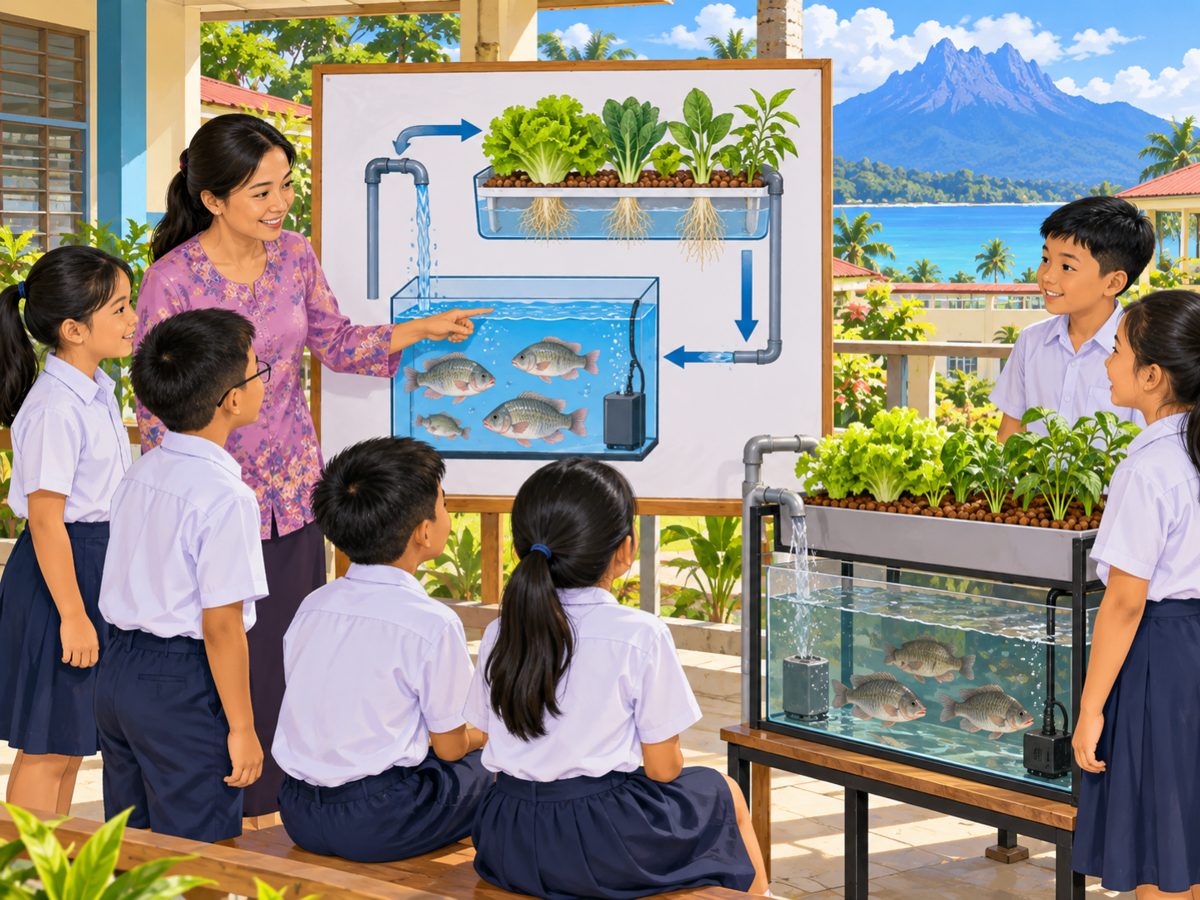
A double bubble map compares two things: the shared points go in the middle and the differences go on the left and right. Aquaponics joins fish farming with soil-free growing: fish waste feeds the plants, and plant roots clean the water for the fish. Because fish live there, pesticide cannot be used.
Example: producing vegetables goes in the middle, but growing in soil belongs only on the ordinary farming side.
Watch out: only points true for both kinds of farming go in the middle; a point true for one side only goes on that side.
feature = ciri; waste = najis; clay soil = tanah liat
In aquaponics the vegetables are not planted in soil; their roots hang in the fish water. Fish waste dissolves in that water and becomes food for the plants. Spraying pesticide every day would kill the fish, so this system avoids it.
Example: a school aquaponics box keeps tilapia in the lower tank and lettuce on top, with water flowing round and round.
Watch out: growing in soil describes ordinary farming, so it goes on the other side of the double bubble map.
Seni Bahasa
Mencipta sajak
Beras wangi hasil kajian MARDI
Butir Wangi
Butir putih di dalam periuk,
harum baunya memikat selera,
hasil kajian tekun dan teliti,
MARDI berbakti untuk negara.
Nasi berkhasiat di atas meja,
sekeluarga makan bersama-sama,
terima kasih wahai petani,
usahamu kami hargai selamanya.
rangkap = kumpulan baris · baris = satu deret perkataan
modern poem = sajak; stanza = rangkap; line = baris; tempting the appetite = memikat selera; nutritious = berkhasiat
A sajak is a modern poem that does not need to rhyme. This one has two stanzas of four lines each, about fragrant rice developed by MARDI, the national farm research institute. When writing, we can fit given phrases such as memikat selera and berkhasiat into our lines. Recite clearly, slowly and with feeling.
Example: harum baunya memikat selera means its smell makes you want to eat.
Watch out: kerahan idea means squeezing out ideas, so plan your topic and feeling before writing.
attract = memikat; cook = memasak; plant = menanam
The word after the blank is selera, appetite. Only memikat pairs with selera to mean making people want to eat. Cooking an appetite or planting an appetite makes no sense, even though cooking and planting are linked to rice.
Example: Bau rendang ibu memikat selera kami means the smell of Mother's rendang makes us hungry.
Watch out: even in a poem, choose a word that makes sense in the line, not just one that matches the topic.
Tatabahasa
Kata adjektif jarak dan perasaan
Lawatan ke ladang pandan
Encik Lim membawa Mei Ling ke ladang kelapa sawit rakannya. Pokok pandan ditanam rapat di antara pokok sawit. Rumah rakannya dekat dengan ladang itu. Encik Lim kagum melihat hasilnya. Mei Ling suka bau daun pandan.
adjective of distance = kata adjektif jarak; adjective of feeling = kata adjektif perasaan; amazed = kagum
Adjectives of distance tell how near or far: dekat (near), jauh (far), hampir (close to) and rapat (tightly close). Adjectives of feeling describe emotions: suka (like), kagum (amazed), gembira (happy) and takut (afraid).
Example: Pandan ditanam rapat supaya rumput tidak tumbuh means the pandan is planted close together so weeds cannot grow.
Watch out: hampir can also mean almost, as in hampir siap, so read the whole sentence.
Tatabahasa
Kata adjektif pancaindera
Mata, telinga, hidung, lidah dan kulit
Lihat (mata)
indah, cantik
Dengar (telinga)
bising, merdu
Bau (hidung)
wangi, busuk
Rasa (lidah)
manis, masam
Sentuh (kulit)
licin, kesat
Daun pandan licin. Batang sawit kesat. Kehijauan ladang itu sungguh indah.
adjective of the senses = kata adjektif pancaindera; smooth = licin; rough = kesat; noisy = bising
Pancaindera means the five senses: seeing, hearing, smelling, tasting and touching. What eyes see can be indah or cantik; what ears hear can be bising or merdu; what the nose smells can be wangi; what the tongue tastes can be manis; what skin feels can be licin or kesat.
Example: pandan leaves feel smooth, so daun pandan licin; an oil palm trunk feels rough, so batang sawit kesat.
Watch out: wangi belongs to the nose, not the tongue; for a sweet taste use manis.
matching = padanan; type = jenis; sense = deria
The five adjectives on the left each belong to a different group: wangi is smelt, bising is heard, kesat is felt by touch, jauh is about distance, and kagum is about a feeling inside. For each one, ask which sense tells you about it, or whether it is about distance or emotion.
Example: in Bunyi mesin rumput itu bising, the noise reaches our ears, so it belongs to hearing.
Watch out: kagum is not how something looks; it is the admiring feeling we get after seeing it.
Tatabahasa · Soalan 6
Pilih kata adjektif yang sesuai.
Pokok pandan ditanam ________ supaya rumput tidak tumbuh.
紧密 = rapat;吵 = bising;佩服 = kagum
句子讲的是斑斓之间的距离:种得怎样,杂草才长不出来?要选距离形容词 rapat(挨得很近)。bising 是声音,kagum 是心情,都不能形容植物之间的距离。
例子:Kerusi di dewan disusun rapat supaya muat ramai murid. 礼堂的椅子排得很密。
注意:rapat 也可以指“亲密”,例如 kawan rapat(好朋友)。
close together = rapat; noisy = bising; amazed = kagum
The sentence is about the space between pandan plants: how should they be planted so weeds cannot grow? We need the distance adjective rapat. Bising describes sound and kagum describes a feeling, so neither can describe how far apart plants are.
Example: Kerusi di dewan disusun rapat means the hall chairs are arranged closely so many pupils fit.
Watch out: rapat can also mean close in friendship, as in kawan rapat.
Tatabahasa
Kata hubung: dan, yang, kerana
Tapak semaian pokok tin
dan
Encik Lim ke tapak semaian. Mei Ling ke tapak semaian. → Encik Lim dan Mei Ling ke tapak semaian.
yang
Puan Dayang ada ladang pokok tin. Ladang itu luas. → Puan Dayang ada ladang pokok tin yang luas.
kerana
Anak benih itu layu. Anak benih itu tidak disiram. → Anak benih itu layu kerana tidak disiram.
连词 = kata hubung;育苗圃 = tapak semaian;树苗 = anak benih
连词把两个短句接成一句,重复的部分只留一次。dan 连接同样重要的两样东西;yang 说明前面的名词;kerana 说明原因。
例子:Pokok tin itu berbuah lebat kerana dibaja setiap minggu. 因为每周施肥,所以结果多。
注意:kerana 后面放原因,不要放结果。
conjunction = kata hubung; nursery = tapak semaian; fig tree = pokok tin; seedling = anak benih
A conjunction joins two short sentences into one, so we do not repeat the same words. Dan links two equally important things; yang describes the noun before it; kerana gives a reason. When joining, the repeated part is kept only once.
Example: Pokok tin itu berbuah lebat kerana dibaja setiap minggu means the fig tree fruits well because it is fed every week.
Watch out: the reason comes after kerana; do not put the result there.
Tatabahasa · Bina ayat
Gabungkan menjadi satu ayat
合句 = gabungkan ayat;企业家 = usahawan;成功的 = yang berjaya
两句分别说 Puan Dayang 是一位企业家、她很成功。重复的名字只留一次,再把 yang 接在 usahawan 后面,变成“成功的企业家”。马来文的形容部分一定放在名词后面。
例子:我有一辆新脚车,马来文说 basikal yang baharu,“新”放在“脚车”后面。
注意:不要照华文语序写成 yang berjaya usahawan。
join sentences = gabungkan ayat; who is successful = yang berjaya; entrepreneur = usahawan
The two short sentences say that Puan Dayang is an entrepreneur and that she is successful. Keep Puan Dayang only once, then put yang after usahawan to describe her as a successful entrepreneur. In Malay, the describing part comes after the noun.
Example: Saya ada basikal. Basikal itu baharu. becomes Saya ada basikal yang baharu.
Watch out: do not write yang berjaya usahawan; that follows Chinese or English word order, not Malay.
Ringkasan
Syabas!
Pertanian memberi pendapatan kepada keluarga.
Kita belajar ayat silaan dan larangan, idea utama, peta buih berganda, sajak, kata adjektif jarak, perasaan dan pancaindera, serta kata hubung dan, yang, kerana.